Revitalising a brownfield with limited environmental and financial impact

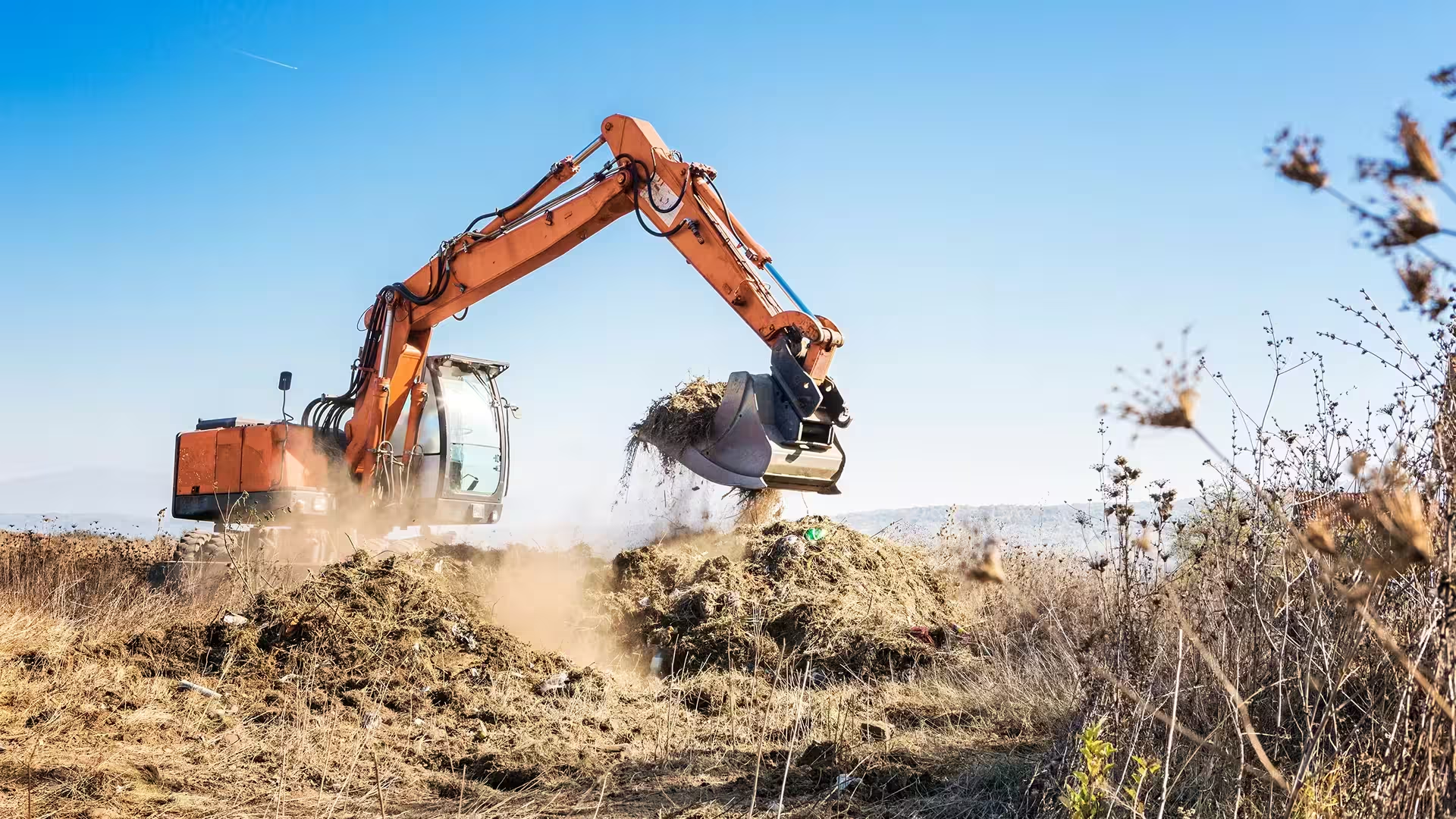
The development of new projects or new activities should now be considered through the revaluation of wastelands rather than by denaturating agricultural areas. However, such projects often involve sanitation costs that are difficult to bear. Unless one acts methodically, seeking to optimize the project on the basis of an environmental study carried out in the initial phases of the project
The project to revalorize the former Henricot foundry in Court-Saint-Etienne, led by Equilis, to make it a sustainable neighborhood, testifies to the relevance of such an approach.
With the Court-Village Project, the desire of Equilis, its promoter, was to build a sustainable neighborhood on the site of this former foundry, located in Court-Saint-Etienne. This project integrates housing with commercial areas on the ground floor. ” We intervened on this file after the demolition of the old buildings in order to conduct a study relating to soil pollution control and a impact study, explains Jean-Marc Lambert, director of the ABV Development group. From the start of the project, our desire is to help the customer carry out their project successfully by seeking in particular to reduce the cost of sanitation. ”
Limiting the excavation of polluted land
In the soil of a former smelter, hydrocarbons and heavy metals are most often found. Therefore, when considering a housing project on such a site, all polluted land evacuated during earthworks must be sent to a treatment center.
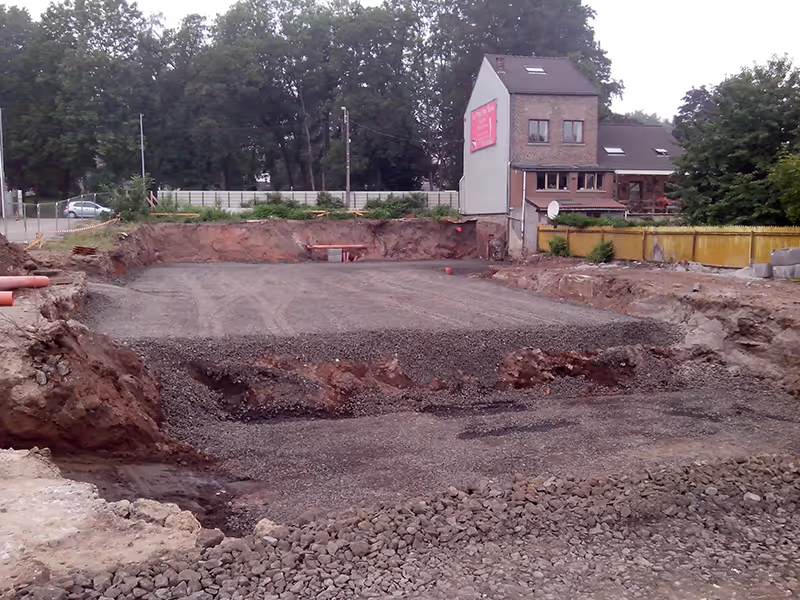
The operation represents a significant cost, which can often annihilate the profitability of a project and thus destroy its feasibility. ” The idea, as a design office, is to position ourselves as a partner of the promoter and his project. If carried out early enough in the project development phase, Soil study allows you to work in collaboration with the architect to consider the location of future buildings that take into account underground pollution, continues Jean-Marc Lambert, from ABV Development. In this way, we can limit Excavation of polluted land and better manage risks. ”
Economic and environmental interest
Such an approach has several advantages. A precise identification of the pollution present in the ground and the risks it presents makes it possible to better understand the impacts associated with the project. ” We can therefore consider future developments taking these elements into account, confine pollution where necessary, excavate only where necessary. ”, continues Jean-Marc Lambert. In addition to reducing sanitation costs, the approach also has environmental benefits. “The obligation to excavate land has a major impact in terms of CO emissions.2, whether through the treatment imposed or because of the environmental cost associated with their transport”, continues the manager.
Reuse non-polluted waste locally
In order to limit the cargoes associated with sanitation, one solution lies in screening the elements recovered from the ground.
” Following a demolition, the brick and concrete present are not polluted and, therefore, should not leave with the land intended to be treated. This is construction waste that can be reused locally, at the level of the new project. In this way, in Court-Saint-Etienne, we were able to divide the volume of soil to be treated by two ”, assures Jean-Marc Lambert.
Enabling the effective revaluation of wastelands
At the level of the Equilis project in Court-Saint-Etienne, the intervention of design office ABV Development, prior to the initial work, made it possible to make strategic decisions to both limit the cost of sanitation and optimize the environmental impact of the project. ” For example, on our advice, it was decided to raise the threshold of buildings by 60 centimeters, simply to be able to accommodate the excavated soil and construction waste that was not polluted. ”, comments Jean-Marc Lambert.
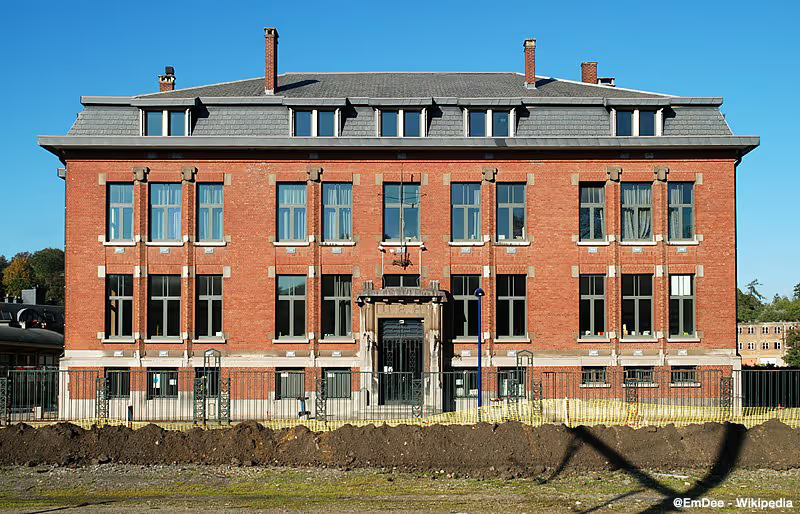
The gain is economic, because it reduces sanitation costs; social, because it avoids generating unnecessary nuisances associated with truck transport; and finally environmental.
” On the Court-Village project, our intervention early in the project made it possible to substantially reduce sanitation costs. Without this, the project would probably not have seen the light of day, concludes Jean-Marc Lambert. This last element is essential for us. In the way we consider our missions and our work, the desire is above all to allow projects to succeed. We are therefore doing everything possible, in partnership with developers and architects, to succeed in bringing these wastelands back to life rather than considering the exploitation of agricultural areas. ”