
Sustainability, Climate & Energy

In an environment of rising energy costs, tightening regulatory transparency requirements, and increasing pressure on companies to demonstrate their climate commitments, sustainability has become a strategic imperative in its own right.
ABV Development supports companies throughout their climate and energy initiatives: energy audits and industrial process decarbonization, carbon footprint assessment and implementation of the CO2 Performance Ladder®, product life cycle analysis, structuring sustainability reporting (CSRD, VSME), and identifying available grants and tax incentives to finance the transition.
As an energy auditor recognized by the Walloon Region and an expert in ESG standards, our multidisciplinary teams operate in all three Belgian regions, from preliminary analysis to operational implementation.

Carbon Strategy and Energy Management
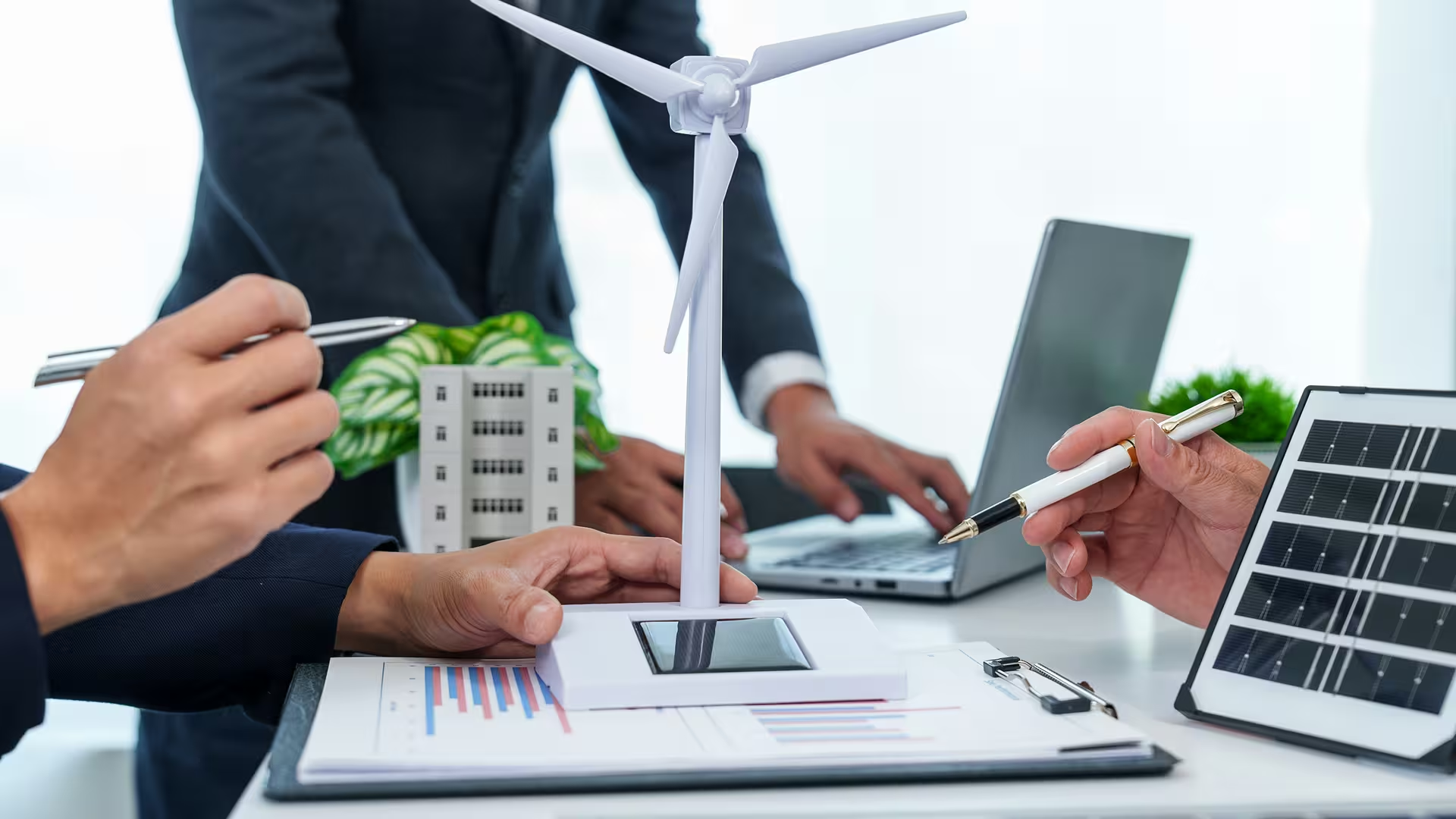
ABV Environment, an energy auditorrecognized by the Walloon Region, conducts comprehensive audits of industrial processes and identifies priority improvement measures.
The carbon footprint (scopes 1, 2, and 3) allows for precise emission assessment, the definition of reduction targets, and the implementation of theCO2 Performance Ladder® : a certification valued in public tenders.
In Wallonia, the AMUREBA program can fund up to 75% of energy audit costs.
Climate resilience and vulnerability
TheClimate Impact Assessment (CIA) and theClimate Risk and Vulnerability Assessment (CRVA) allow for the anticipation of these risks over 50 to 100-year horizons, relying on recognized international models and standards, and incorporating the methodological guidance of the European Commission (JASPERS).
ABV Environment supports international project developers inassessing their exposure to climate hazards, defining mitigation and adaptation measures, and integrating these recommendations into project design and development.
Life Cycle Assessment (LCA)
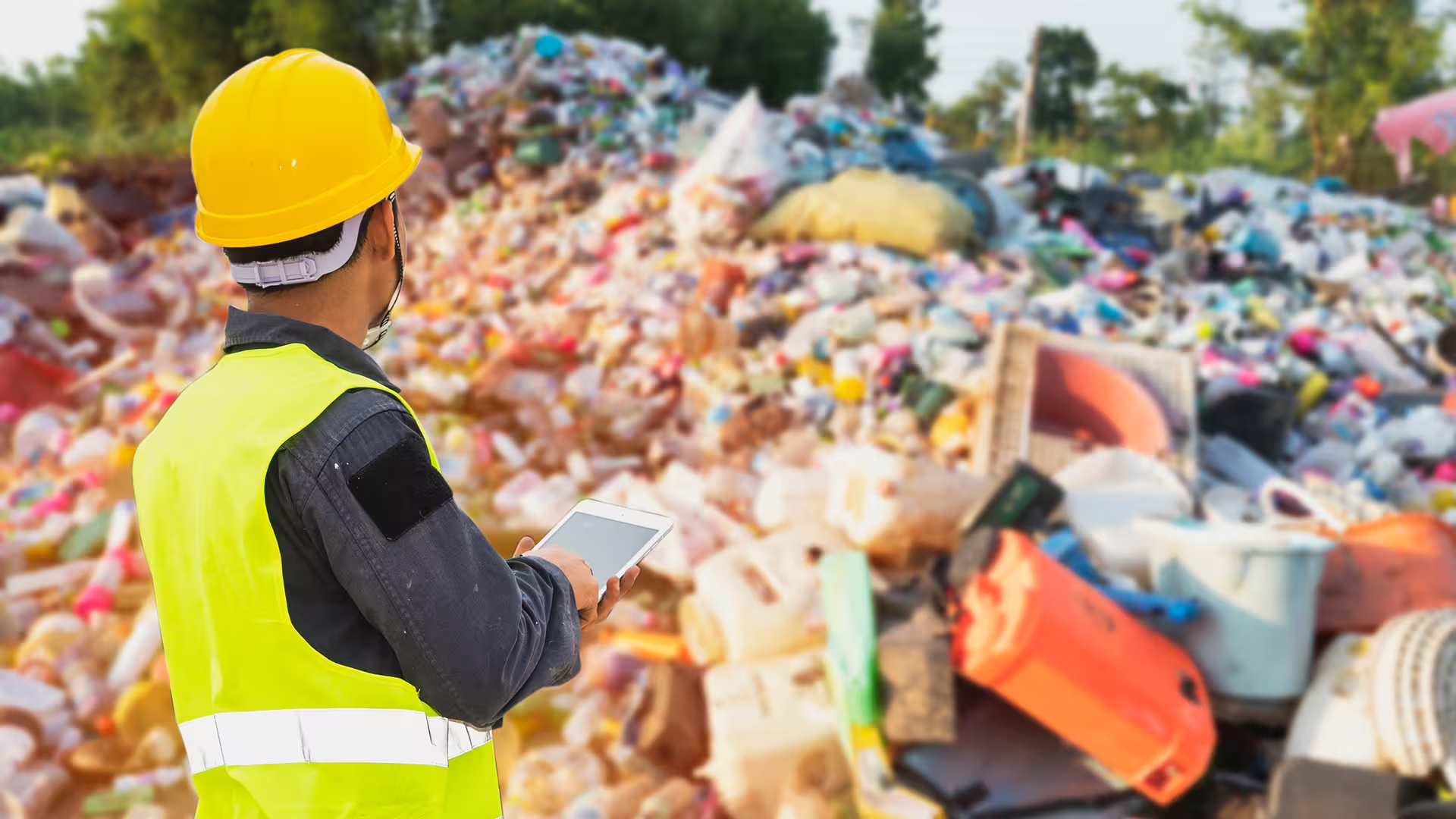
LifeCycle Assessment (LCA) evaluates the environmental impacts of a product at every stage (from raw material extraction to end-of-life) and assigns an overall environmental score.
On this basis, ABV Environment identifies improvement levers within the value chain and supports companies in their Environmental Product Declaration (EPD) processes and the creation of Environmental and Health Declaration Sheets (EPDs), using recognized tools (OpenLCA, Ecoinvent).

Sustainability Reporting: CSRD & VSME (ESG)
The CSRDdirective, as revised by the Omnibus package adopted on December 16, 2025, requires large companies (with more than 1,000 employees and a net turnover exceeding €450M) to publish a sustainability report structured according to the 12 ESRS standards. A two-year regulatory delay ("stop the clock") has been introduced for the affected waves, with the first publication for newly covered companies expected in 2028.
For SMEs not subject to the CSRD, the VSME standard offers a voluntary framework structured into two modules (11 or 20 ESG topics).
ABV Environment supports the double materialityanalysis, the compliance assessment and the drafting of the sustainability report.
Financing the energy transition
In Flanders, VLAIO offers theEcologie Premie+, the STRES (starting at €1.5M, with 20% to 55% funding), and Green support for process electrification and industrial decarbonization..
In Wallonia, Green subsidies cover four pillars (energy efficiency, renewable energy, environmental protection, and refrigeration units) with rates ranging from 8% to 50%.
Regarding tax, the Investment Deduction (ID) (reformed as of January 1, 2025) allows for a 40% reduction in the taxable base for thematic investments (energy saving, low-carbon transport, environment, and sustainable digital solutions).
ABV Enterprise handles the entire process, from eligibility analysis to securing the funding.
Frequently Asked Questions