Biodiversity, water & circularity
End of Waste
ABV Environment supports you through the process of obtaining end-of-waste status or byproduct recognition.
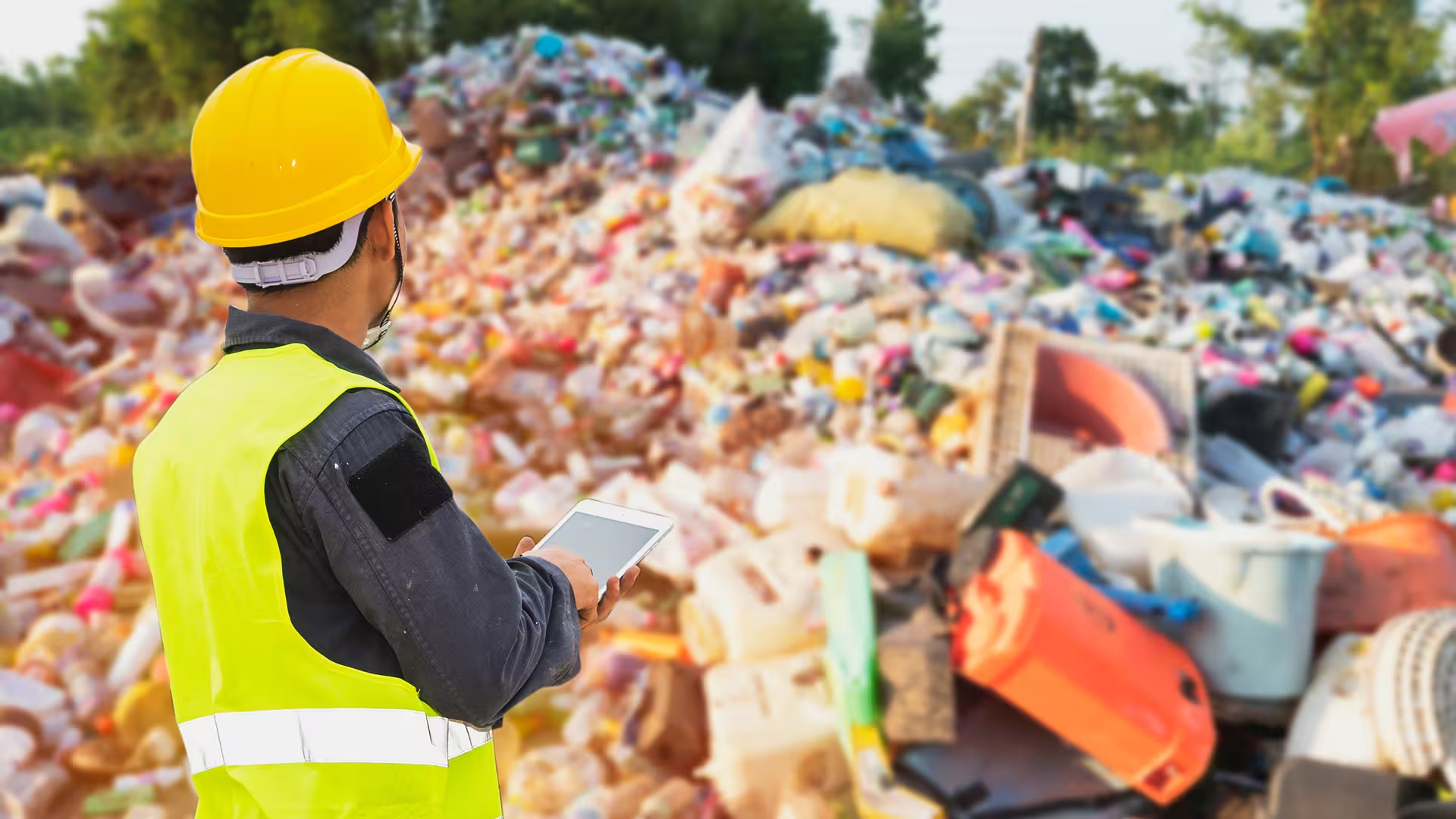
To support a circular economy and reduce pressure on natural resources, it is essential to facilitate the reuse and recovery of substances currently classified as waste or by-products.
In Belgium, waste has a specific legal status, as do by-products. Any material recognized as such must be managed, collected, transported, recovered, or disposed of in accordance with a precise legal framework. ABV Development assists you in the procedures to terminate a material's waste status or to obtain its recognition as a by-product.
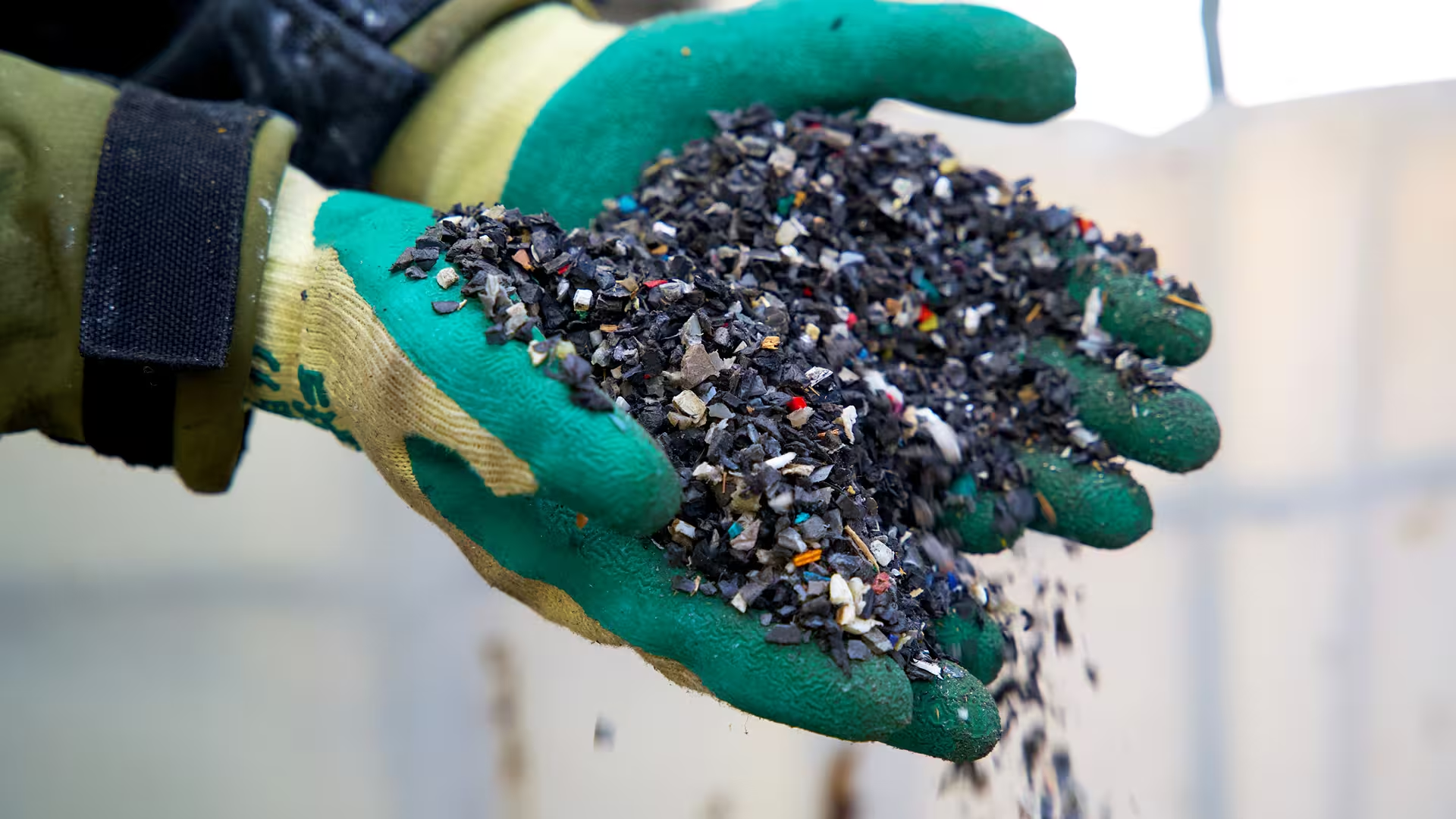
Waste or by-product: what is the status of your material?
A waste is any object or substance that the holder discards, intends to discard, or is required to discard.
A by-product is a substance resulting from a production process whose primary purpose is not its production. It is considered a by-product (and not waste) if it meets three conditions: its further use is certain, it can be used directly without any further processing other than normal industrial practice, and it is an integral part of a production process.
To cease to be waste, the substance or object must meet four criteria (Wallonia and Brussels): it is commonly used for a specific purpose, there is a market or demand for it, it fulfills the technical requirements for its new use, and it does not cause harmful effects on the environment or human health.
A by-product is a substance resulting from a production process whose primary purpose is not its production. It is considered a by-product (and not waste) if it meets three conditions: its further use is certain, it can be used directly without any further processing other than normal industrial practice, and it is an integral part of a production process.
To cease to be waste, the substance or object must meet four criteria (Wallonia and Brussels): it is commonly used for a specific purpose, there is a market or demand for it, it fulfills the technical requirements for its new use, and it does not cause harmful effects on the environment or human health.
Our support: from analysis to status approval