Management of excavated soil in Wallonia

The Walloon Region has adopted a new legal framework for land movement, namely the Walloon Government Decree of 5 July 2018 relating to the management and traceability of land (MB: 12/10/2018), which came into force on 1 May 2020.
This comprehensive legal framework to ensure a adapted management of excavated soil, concerns all actors involved in construction sites involving land excavation, namely: project owners/developers (including municipalities, real estate developers, architects), companies responsible for land movements, operators of authorized land treatment centers or even land valorers.
This Decree also introduces a new actor, the asbl Walterre, recognized by the Walloon Region as the operator in charge of land quality and land movement control missions.
As a certified expert in environmental permit, ABV Development helps you see things more clearly.
What types of land are affected by this legislative framework?
The legislation applies to all construction sites involving land movements (entering, leaving or internal to the site)
- Excavation land (including arable land, used for site development, construction or soil remediation);
- Land produced from the washing or mechanical treatment of beets or various vegetables;
- Road land;
- Decontaminated land from a treatment center.
Depending on certain criteria such as the volume, the type of use, the suspicious nature or not, the administrative context of the site,... it may or may not be necessary to carry out land quality controls and/or administrative procedures related to land traceability.
When should land quality control be carried out?
A sampling (by a soil expert or a registered sampler) and a systematic check of the soil must be carried out at the site of the excavated area, except in the following cases:
- When the total volume of excess soil on the non-suspect site of origin does not exceed 400 m³ and the receiving site has an identical or less sensitive type of use than that of the site of origin;
- When the total volume of excess soil at the site of non-suspect origin does not exceed 10 m³;
- Extractive waste and quarry discovery land used on the site of origin within the same establishment;
- Excavated soil excavated as part of remediation actions and works on land subject to an approved remediation project, and reused on the ground or transported to an authorized polluted soil treatment facility;
- Excavated land from a non-suspect site, excavated in a type I (natural) or II (agricultural) use zone and reused in place of a site (or an area) of the same type of use;
- When excavated soil is road soil intended to be reused in the platform of another road and under certain conditions.
This control of the land before evacuation makes it possible to know its quality as soon as it is excavated and to better predict the costs of managing it.
What is the Land Quality Report (RQT)?
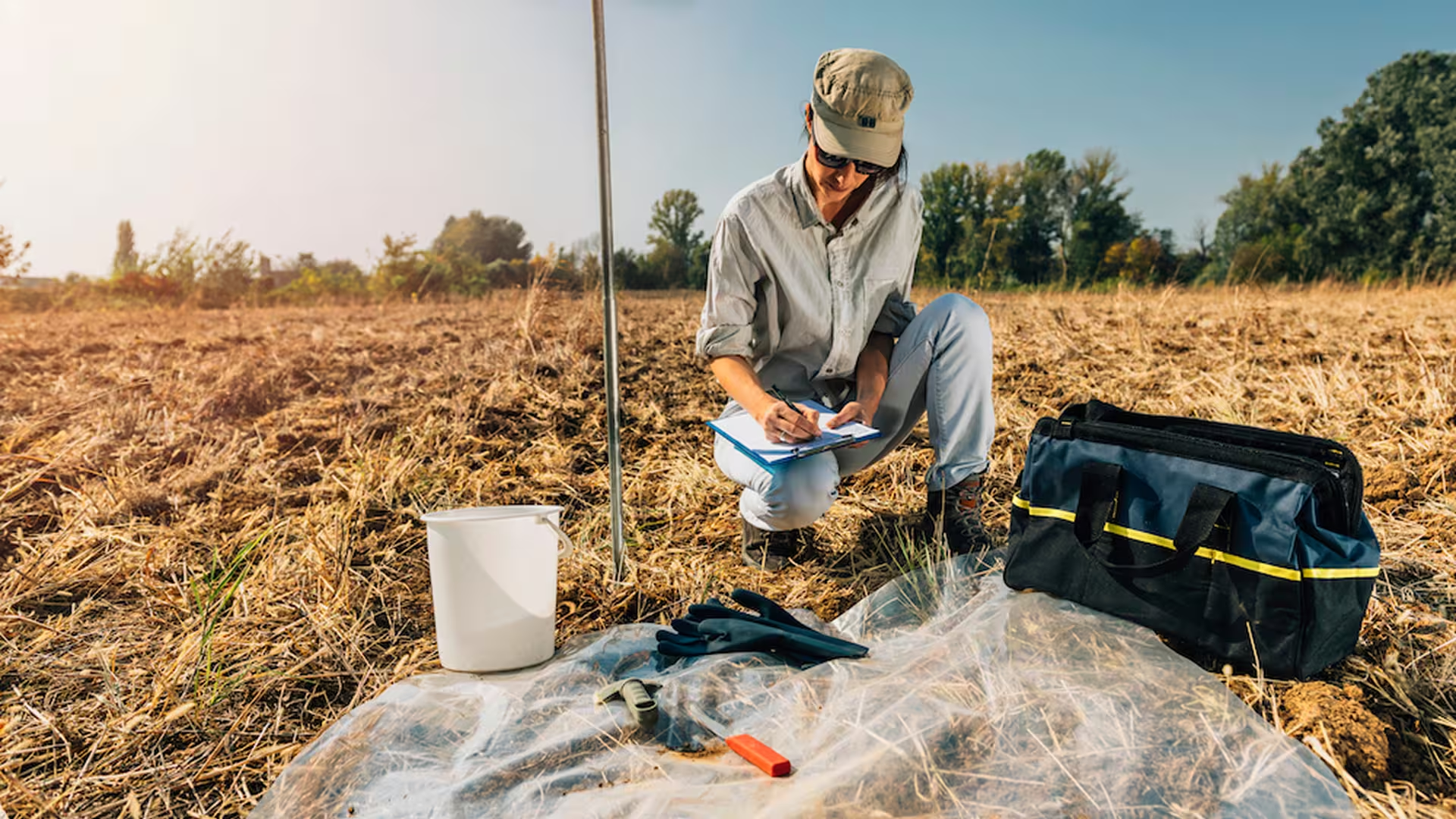
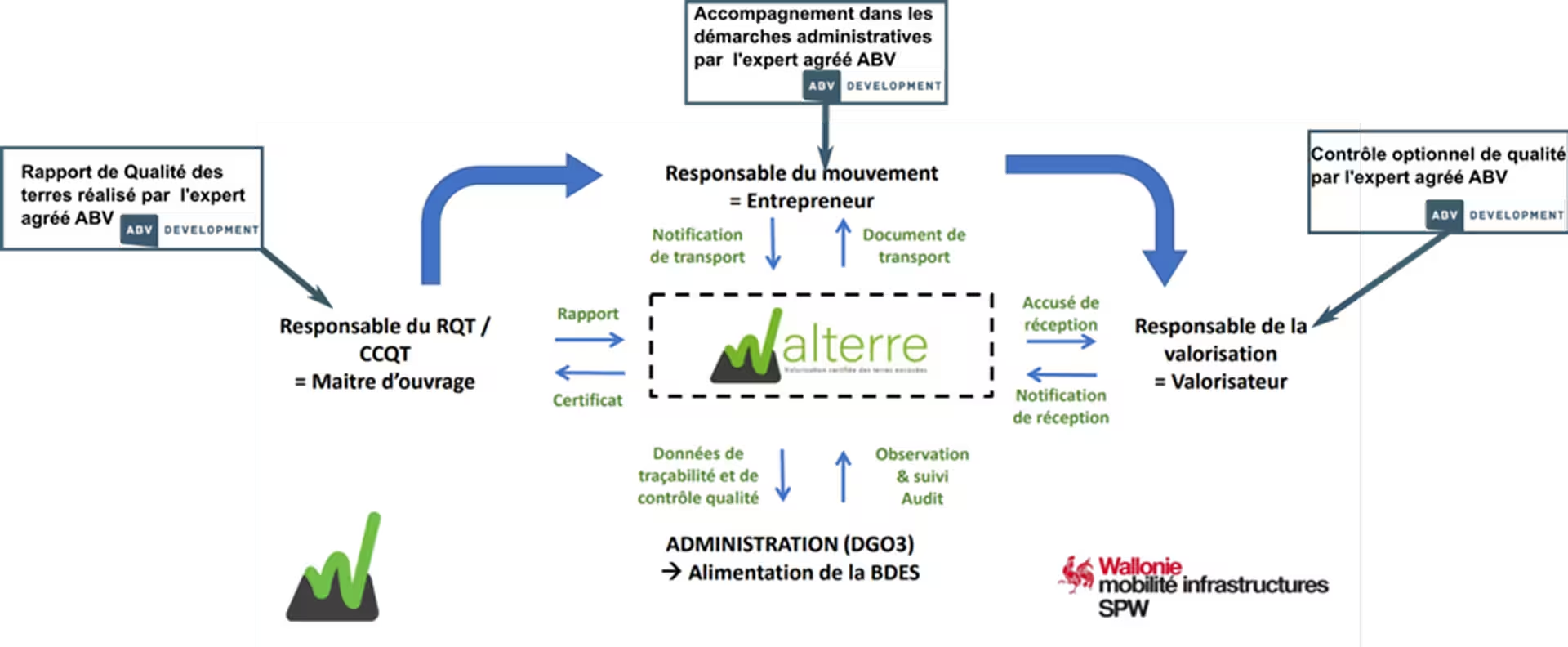
The land control procedure makes it possible to estimate the volume as well as the quality of the land intended to be mobilized. This data is recorded by a certified soil expert in a “Land Quality Report” which is sent to the Walterre asbl, which verifies its completeness and, if necessary, issues a “Land Quality Control Certificate (CCQT)”.
What are the possible uses of excavated soil?
Once the land quality control certificate has been received, the company responsible for land movement has the opportunity to:
- Evacuate land from the site of origin to an authorized facility for pre-treatment and/or treatment, temporary storage, sorting and/or grouping;
- Evacuate land from the site of origin to a receiving site in order to be valued there;
- Regroup land on the site of origin to be valued there.
This step involves respecting the rules:
- In terms of the types of use of the original site and the receiving site;
- In terms of composition;
- In terms of asbestos fiber contents or even hydrocarbon contents;
- In terms of the presence of invasive species (Japanese knotweed and giant hogweed).
What land movements are subject to a traceability procedure?
An important part of this Order relates to the traceability of excavated soil, which allows it to be monitored from the site of origin to the receiving site, passing, where appropriate, through temporary storage sites, centers for grouping or processing land.
The decree provides for a whole series of cases for which this traceability procedure is not necessary (movement of land of less than 400 m³, excess soil excavated as part of acts and works to remediate land subject to a sanitation project, vegetable production land produced directly on the farm, and reused on agricultural plots of the farm...)
What is the Land Movement Notification (NMT)?
The Land Movement Notification from the site of origin is the responsibility of the person responsible for the evacuation of the land who decides on its destination and carries out or arranges for its transport. This land movement is notified in advance to the administration, or to the monitoring body. If the notification is complete and compliant, a Land Transport Document (DT) is issued. This attests to the compatibility of the receiving site with the quality of the land but also to the compatibility between the type of use of the original site and the type of use of the receiving site in cases where a land quality certificate is not required. Any vehicle transporting land must have the land transport document.
How to notify the receipt of land: Receiving Site Declaration?
The harvester, the receiving site or the operator of the authorized installation must also notify the receipt of the land, or the refusal of its receipt. To do this, a Receiving Site Declaration (DSR) procedure must be carried out on the WALTERRE site.
What are the links and implications with other current legislation?
The implementation of this Order has implications with other laws that should not be overlooked, including:
- New entries relating to backfilling activities at the AGW of 4 July 2002 establishing the list of projects subject to impact studies and installations and activities classified in order to provide for new events giving rise to the obligation to make an environmental declaration or to apply for an environmental permit;
- Registration as a wasteer on the WALTERRE site does not automatically mean that a recoverer is in order from the point of view of the decree of 14 June 2001 promoting the recovery of certain wastes (M.B. 10.07.2001 - err. 18.07.2001 - err. 18.07.2001). This legislation is still current, the text has been adapted according to the excavated land decree.
What services can ABV Development provide in this new legislative framework?
This new legislation has a significant impact on the organization of many construction sites. In particular, it involves the production of technical documents by approved ground experts (RQT) and the carrying out of administrative acts (NMT, DSR, etc.) which lead to the issuance of administrative documents essential to the continuation of your work site (CCQT, DT, etc.). If poorly negotiated, these steps can lead to additional costs and additional deadlines.
ABV Development, certified soil expert, can help you in the development of the various administrative documents and monitoring of procedures under this 'Excavated Earth' decree.
In terms of environmental permits for new sections related to backfilling and the procedure for registering as recovery, ABV Development also supports you in carrying out these administrative procedures.
To contact ABV Environment, send an email to environment@abv-development.com