Soil or groundwater remediation project in the Walloon Region

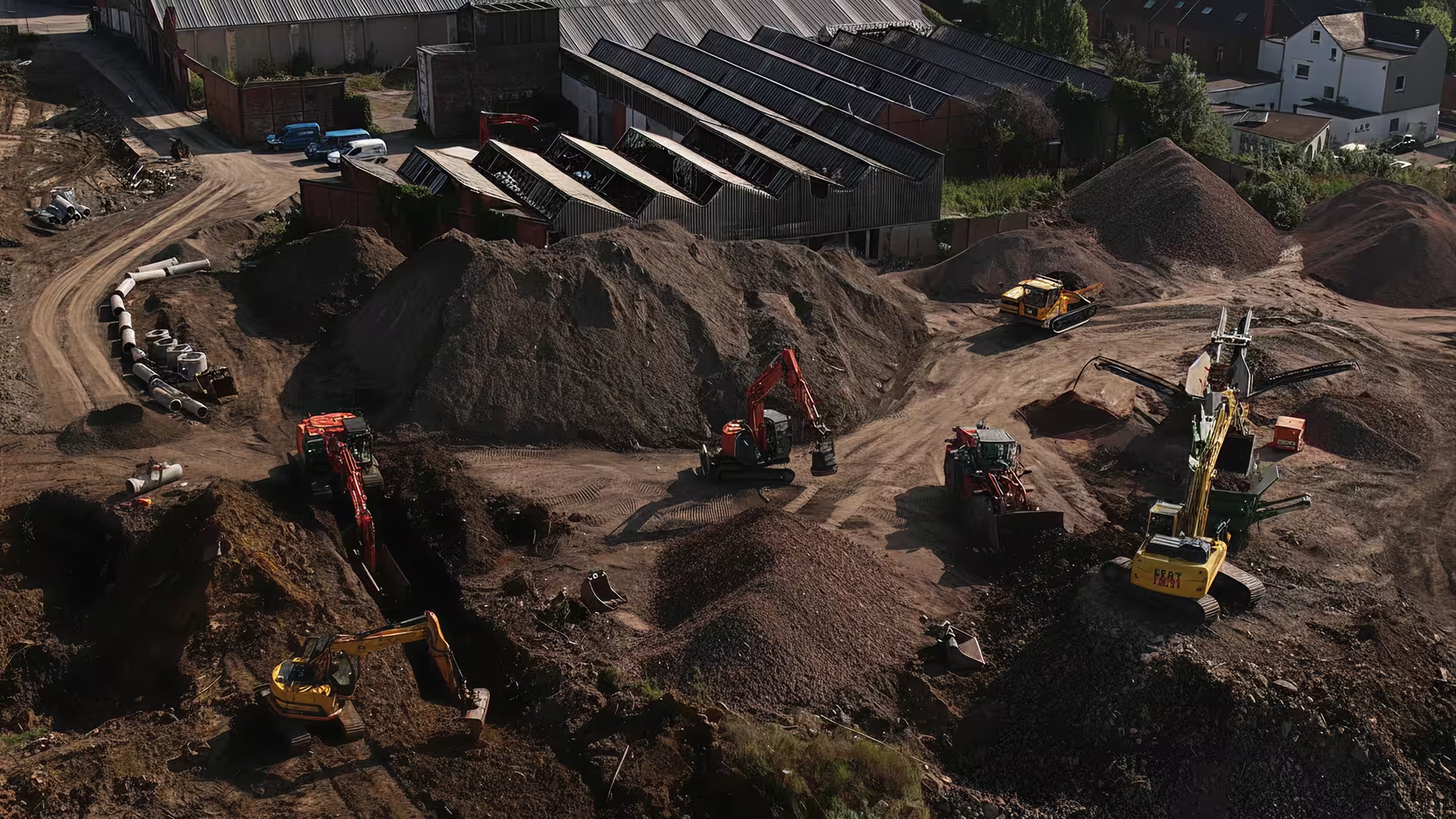
Carry out a soil or groundwater remediation project in the Walloon Region
As part of a brownfield revitalization project or a real estate project that involves managing soil pollution and/or historic embankments, a project owner will have to have a sanitation project carried out for the management of soils or, where appropriate, groundwater.
ABV Development, a design office specializing in the environment, security and land use planning sector, helps you to fully understand these challenges. Through our approach, we enable you to carry out projects in accordance with the regulations in force in the Walloon Region, while ensuring respect for the environment and seeking an optimal financial solution.
What is a sanitation project (soil or groundwater)?
One soil remediation project will have to be carried out in various cases.
In particular, this is necessary in the following situations:
- During a project to revalorize urban and industrial wastelands, if the land concerned presents a risk of contamination.
- As a result of an environmental accident, such as industrial pollution or a leak from a tank.
- When you have to manage land with pollution, especially historic embankments such as those found in urbanized areas.
The requirements of the sanitation project will be defined according to the orientation and characterization studies, which must be carried out beforehand. These studies, conducted in compliance with environmental legislation (and in particular with the Sol Decree of 1Er March 2018 in application in Wallonia), make it possible to determine what it is necessary to take into account as part of the sanitation project: the areas requiring sanitation, possible sanitation techniques, the follow-up to be put in place, the control elements following the project, to ensure that the land complies with the requirements in force.
Also read - What are the key elements of a soil pollution study?
ABV Development, as a design office, has approvals for conducting orientation and characterization studies, and the sanitation project. We support you in the definition of the sanitation project, the establishment of the specifications, in the monitoring of operations until compliance control.
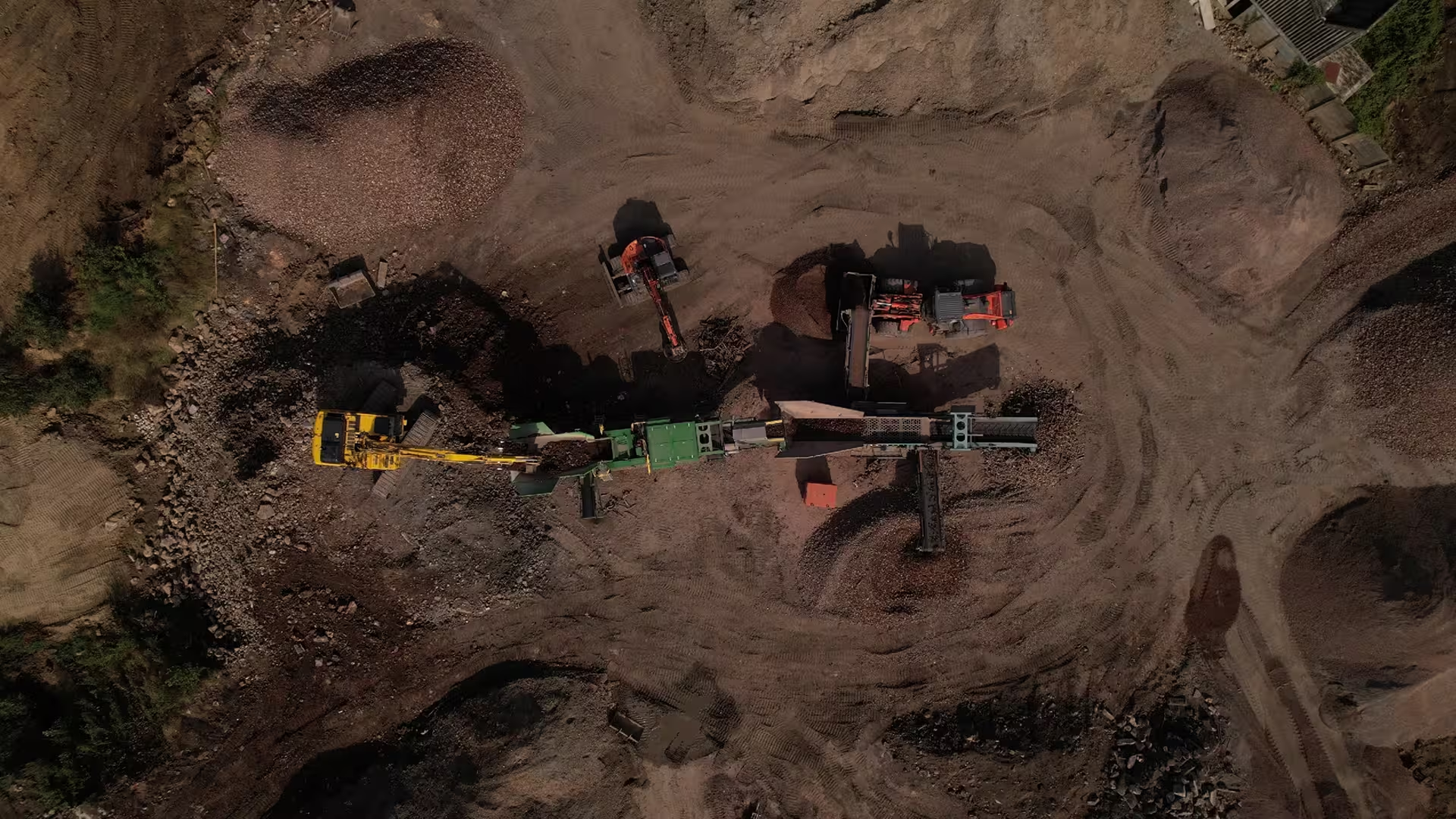
How to properly define a sanitation project?
To define a sanitation project, our office will consider several elements in order to draft the technical clauses of a specification and then be able to launch a call for tenders:
- The most appropriate sanitation technique (s)
- The sizing of these techniques
- The costs
- The intervention schedule
These elements will ideally be evaluated taking into account the project carried out in its entirety, in order to allow the project owner to approach it in the best possible way, taking into account both the constraints environmental, social and financial.
The different soil remediation techniques
Depending on the circumstances and the dimensions of the project, several land or groundwater remediation techniques may be considered.
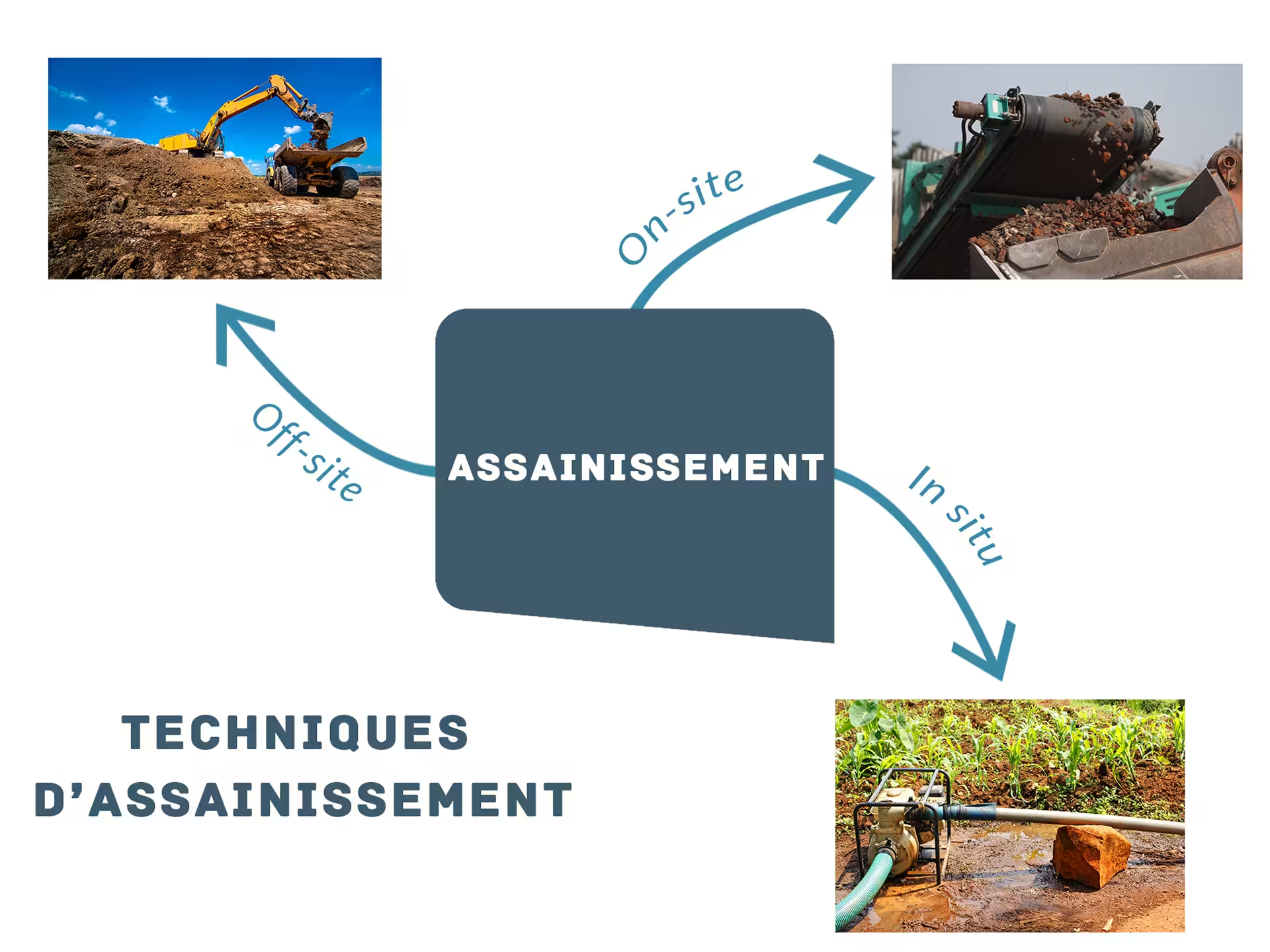
Off-site sanitation techniques
We talk about off-site sanitation techniques when Excave polluted soils and then sent them to a treatment center appropriate. It is the technique most often used in a project to revalorize an urban or industrial wasteland.
In situ sanitation techniques
Sanitation techniques In situ allow treat pollution directly in place, rather than excavating land. In practice, oxidizing products will for example be injected into the soil or into the water table to degrade the pollution present. Pumping and treating groundwater on site is also part of in situ remediation techniques. In situ thermal techniques are also available.
This type of technique is most often considered when it is not feasible to Overcoming polluted land, for technical or financial reasons.
On-site sanitation techniques
With on-site sanitation techniques, land is excavated or polluted water is pumped out, but the treatment is carried out on site. From a unit deployed as part of the project, we will be able, for example, screen and treat soil. The advantage is that we avoid the transport of land, and the nuisances caused by the cart. However, these techniques are only justified if there are large volumes of soil to be treated and a sufficient area available to do so.
Comparing sanitation techniques based on sustainability criteria
For each sanitation project, several techniques can be considered. How do you determine which is the most appropriate? At ABV Development, we make a comparison based on sustainability criteria: social, environmental and financial.
Indeed, each technique has advantages and disadvantages.
A sanitation technique In situ will generally last longer and will be more or less expensive, depending on the treatment to be carried out. An off-site sanitation technique, on the other hand, has significant environmental and social impacts, linked to the movement of land by truck. Depending on the distance to be covered, such an operation also has a greater or lesser cost.
To carry out this comparison, and opt for the most optimal project, the ABV Development office used the GAMMA tool (for Multi-criteria Analysis Grid for Sanitation Methods), set up by the Walloon Region. The approach makes it possible to objectify the choice of the sanitation variant according to a set of sustainability criteria and to determine the optimal solution in environmental, social and financial terms.
Sizing of the sanitation project
In addition to choosing the most appropriate technique, it is also important to be able to properly size the sanitation project. It is a question of determining how far land excavation will be carried out, taking into account the environmental impacts associated with past pollution, but also other factors, such as soil stability, the risk of erosion, especially if buildings or other infrastructures are nearby.
This step involves using engineering skills, to ensure that a project is carried out successfully taking into account the many impacts it can have and to ensure that steps are taken to secure premises.
Our design office, with strong expertise in this field, will be able to help you size your project correctly.

How to optimize the sanitation project and reduce the cost of sanitation?
There are various possibilities for optimizing sanitation, especially if one considers it in a more global project. The better we take into account the context, by anticipating these issues, the more we can explore ways to minimize costs and impacts.
In a real estate project planned on former wastelands, it may be interesting to excavate the land, to screen it on site and to recover the debris of the old buildings. recycled on site in the form of recycled aggregates in order to reuse them as part of the new project.
Also read - Exiting the waste status (SSD) of recycled aggregates in the Walloon Region
Reducing CO emissions2 and the financial costs associated with the project
Such an approach, as recommended during a project in Nivelles, made it possible to reduce the volume of soil and materials evacuated by 30%. The environmental and social nuisances caused by the cart have been reduced in the same proportions, as have the financial costs inherent in the evacuation of land.
More than reducing nuisances, the approach minimizes CO emissions.2 of the real estate project in a consistent manner by integrating it into a circular economy approach. By reusing materials, we avoid producing and importing new ones. That's as much CO2 not issued.
Also read - Businesses: measuring, reducing, offsetting CO2 emissions