Environmental Product Declaration - EPD


What is an environmental product declaration — DEP?
One environmental product declaration is an approach that aims to assess the environmental impact of a product by considering its entire life cycle. This statement is based on a standardized approach.
More and more manufacturers are now integrating environmental issues into the development and production of their products.
“While businesses are not necessarily obliged to do so, this approach meets market expectations, with consumers increasingly concerned about the environmental impact of the goods and services they consume., explain Charlotte Deloge, Project Manager atABV Development. Assessing the environmental impact of its products makes it possible to promote a sustainable approach to customers and partners, and to position itself on the market around these challenges.”
ABV Development has substantial expertise in this field and has already supported many of its clients in this type of approach.
Environmental Product Declaration: Assessing the impact, from cradle to grave
The assessment of the environmental impact of a product is carried out through the environmental product declaration (DEP).
“It's a environmental analysis of the product that takes into account its entire life cycle. Depending on the types of goods analyzed, we will consider all the environmental impacts associated with them, from the cradle to the grave, or even from the cradle to the factory doors., continues the expert. Upstream of its manufacture, we will therefore take into account the raw materials necessary for its manufacture as well as their origin and the resources necessary for its production. Downstream, we evaluate the impacts of transport in the context of its marketing, the production of waste, the environmental cost of recycling, its inclusion in a circular economy approach.”
La DEP is established on the basis of a life cycle analysis. The analysis is therefore not limited to the only greenhouse gas emissions associated with the production of the product. It includes all the environmental impacts related to its life cycle, such as the use of natural resources or even the production and waste management.
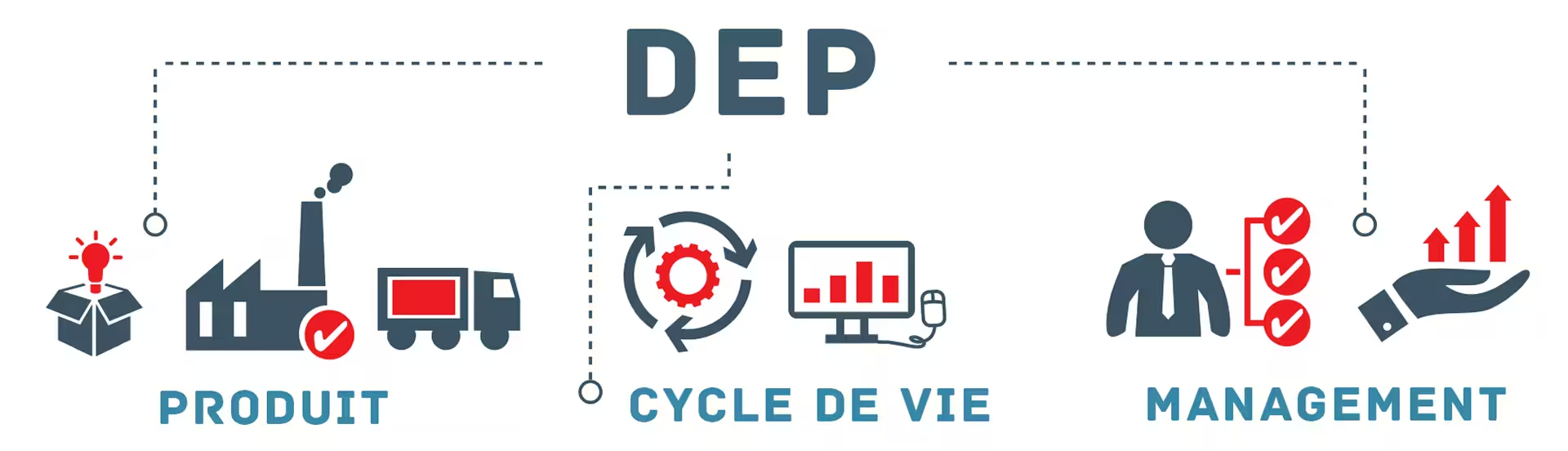
The DEP meets specific standards and rules
This statement is drawn up in accordance with the international standard. ISO 14025 relating to type III environmental declarations.
“The challenge is to be able to build these statements from the same base so that they can be compared. For example, the method will vary depending on the product category. The Product Category Rules (PCR), in this field, define the elements, requirements and guidelines for drawing up an environmental declaration for each product category.”, explain Charlotte Deloge.
Reassembling the entire value chain
To draw up an environmental product declaration, ABV Development, as design office specialized in the field of the environment, will compile all the information relating to the environmental cost of materials and their origin.
“You have to be able to trace the entire value chain. It's not always obvious, explain Charlotte Deloge. It is about being able to best account for the reality associated with each product. To do this, the best thing is to be able to have accurate information at your disposal. But that's not always possible. We also rely on various indicators when certain data is missing.”
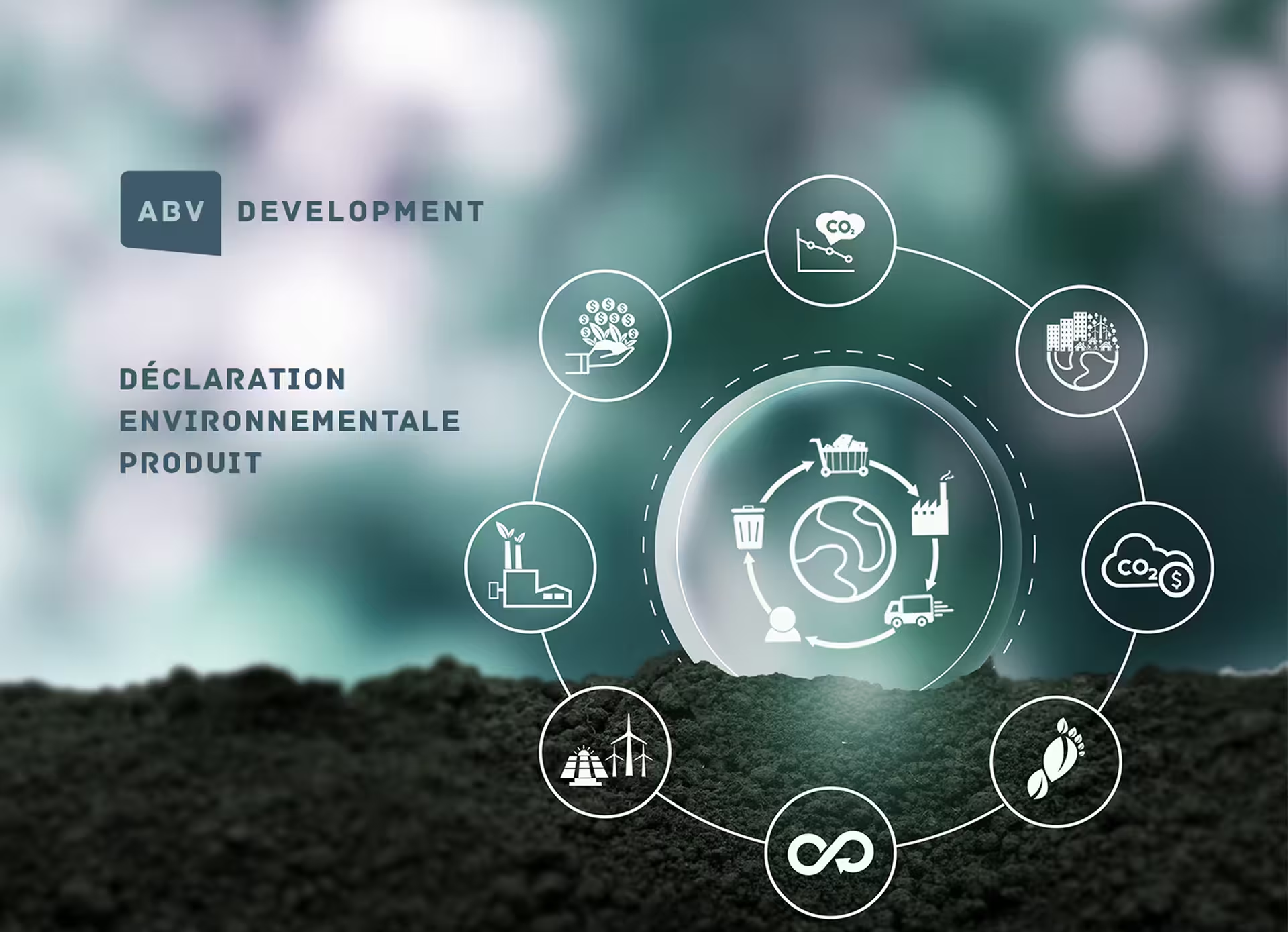
Compare the environmental impact of your product to others in order to improve it
For each environmental declaration produced, an independent external audit is carried out. The declaration can then be recorded in a database, allowing everyone to compare the environmental performance of their products with others in the same category.
“It's not a ranking. Moreover, today there is no level to reach. The desire is to have an objective and shared database, on which you can make comparisons in order to improve the impact of your products.”, concludes Charlotte Deloge.