Japanese knotweed

What is Japanese knotweed?
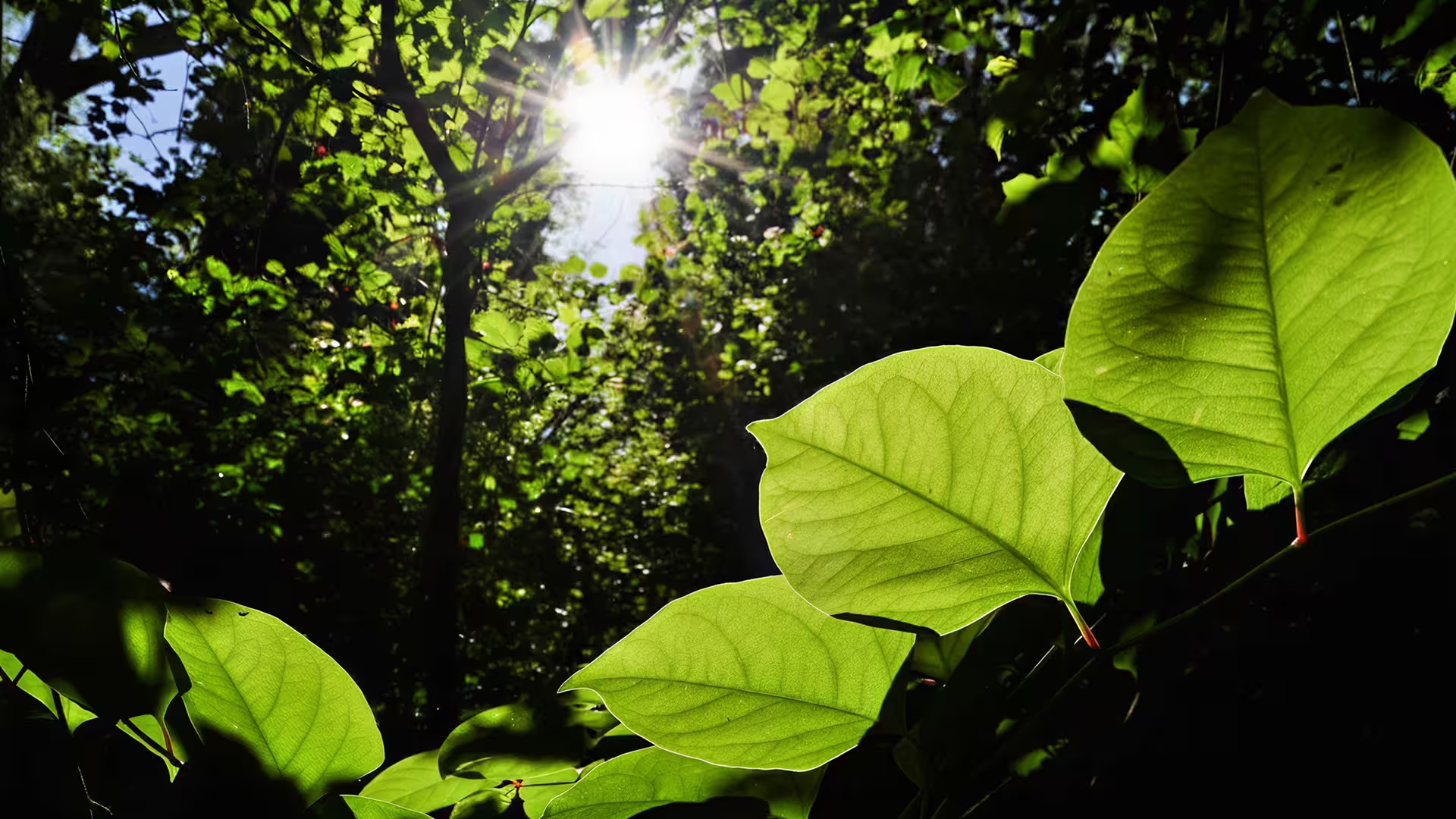
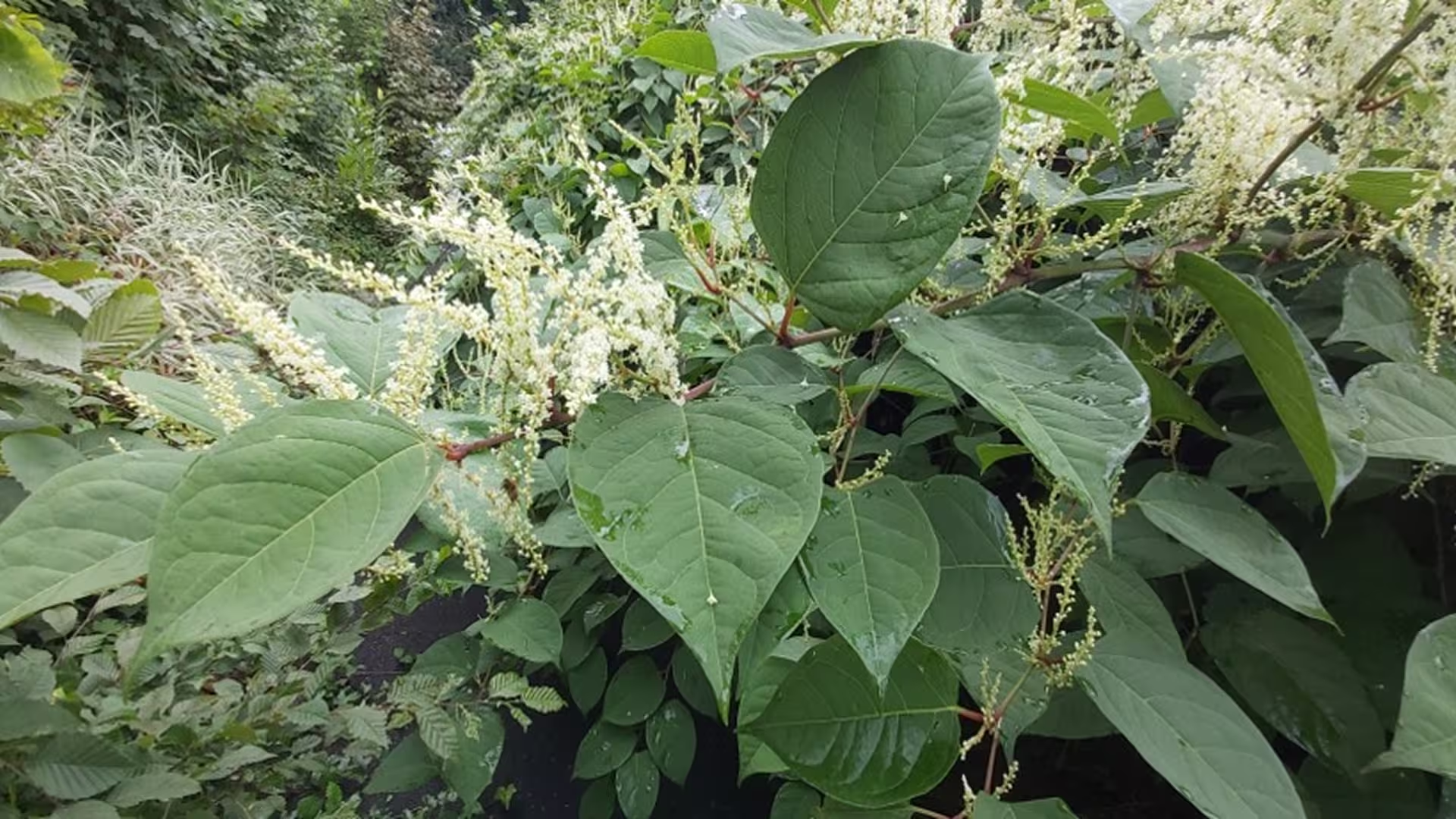
Japanese knotweed is a perennial plant native to Asia.
Although it is renowned for its medicinal properties, it is considered a harmful plant in Belgium and has spread widely throughout Wallonia.
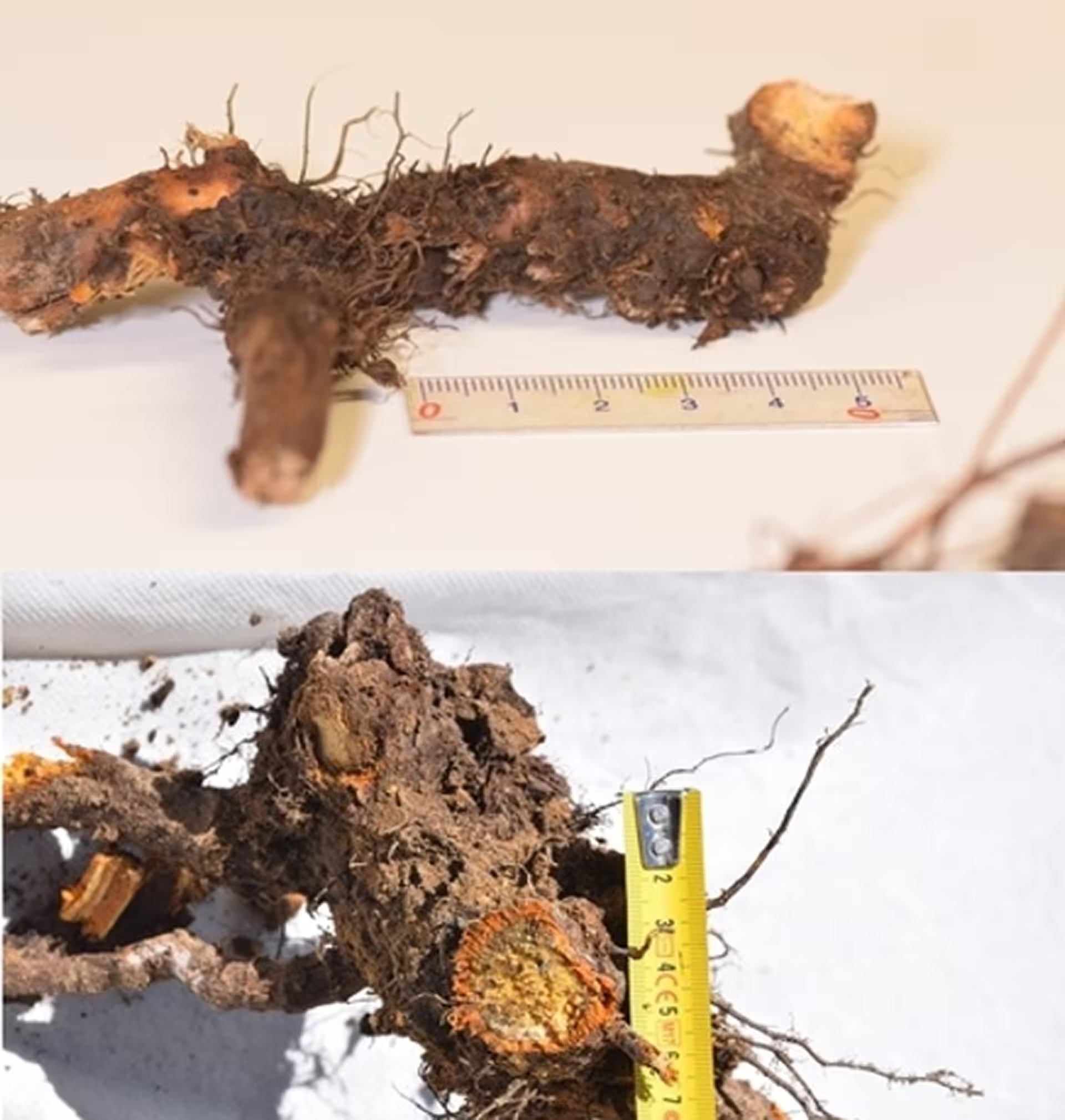
Asian knotweed survive the winter through the underground buds that dot their rhizomes.
In spring, these plants grow very quickly and their aerial stems can grow more than 10 cm per day. Rhizomes can grow by 1 m per year and can spread laterally over 5 m around aerial stems. They go up to 2 m deep into the ground, sometimes more (embankment land).
Why is it considered harmful?
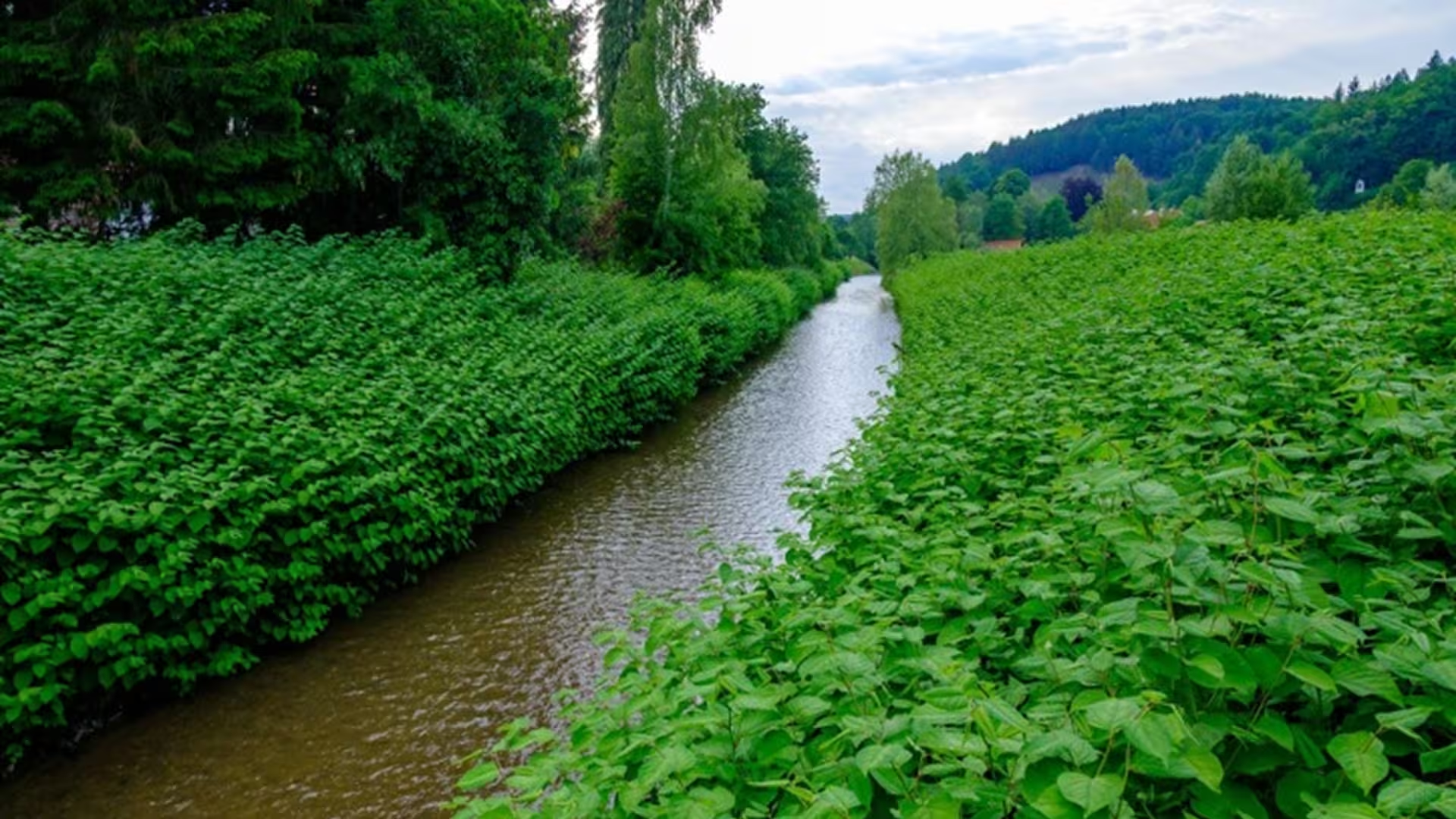
Besides the fact that the plants are dense and interfere with the maintenance of roads and waterways, Japanese knotweed is a threat to biodiversity because it grows very quickly and prevents native vegetation from developing.
How do you get rid of them?
Japanese knotweed is difficult to eliminate, due to its high growth rate and its significant regenerative capacity.
Although some techniques to combat this plant exist, they rarely make it possible to get rid of it definitively. Moreover, it is sometimes preferable not to intervene if these plants do not present obvious discomfort, because although their growth is rapid, knotweed trees only rarely produce viable seeds; they reproduce mainly by cutting at the start of stem fragments or pieces of rhizomes. These are most often produced by management related to the maintenance of roadsides and the movement of land.
However, if elimination is necessary, a decision-making tree of techniques has been developed by the CIeI (Interdepartmental Cell Invasive Species).
What are the treatments for your contaminated soil?
At present, the methods of treatment/valorization of soil contaminated with Asian knotweed propagules are as follows:
- burial and cover with more than 5 meters of healthy land;
- encapsulation of contaminated soil in a geotextile and covering with at least 2 meters of healthy soil, below ground level
- evacuation in a class 2 technical landfill
- heat treatment: any method bringing the soil to a temperature of at least 450° C. (incineration, thermal desorption, vitrification, pyrolysis, etc.).
The transport of contaminated land also requires the implementation of specific provisions:
- transport can only be carried out in a tarpaulin truck
- The dumpster of the hauler truck must be thoroughly washed in line with the spill area before any other type of material can be transported
It is also recommended to avoid driving as much as possible in an area contaminated by invasive plants. Any construction equipment that comes into contact with land contaminated by invasive plants must be washed before leaving the construction site. Special attention should be paid to wheels and/or tracks.
And ABV in there?
Thanks to their experience, the experts at ABV Environment can easily help you identify knotweeds, guide you on the best way to intervene if necessary, and estimate the cost of remediating your land contaminated by rhizomes. The work of our experts will also consist in verifying that the evacuation of your contaminated land is carried out correctly and in attesting to the absence of residual rhizomes on the rest of your land.
Do not hesitate to contact us! With or without relapses, your project must succeed!