Circular economy in real estate: reuse of recycled aggregates

Circular economy: reuse of recycled aggregates for a real estate project
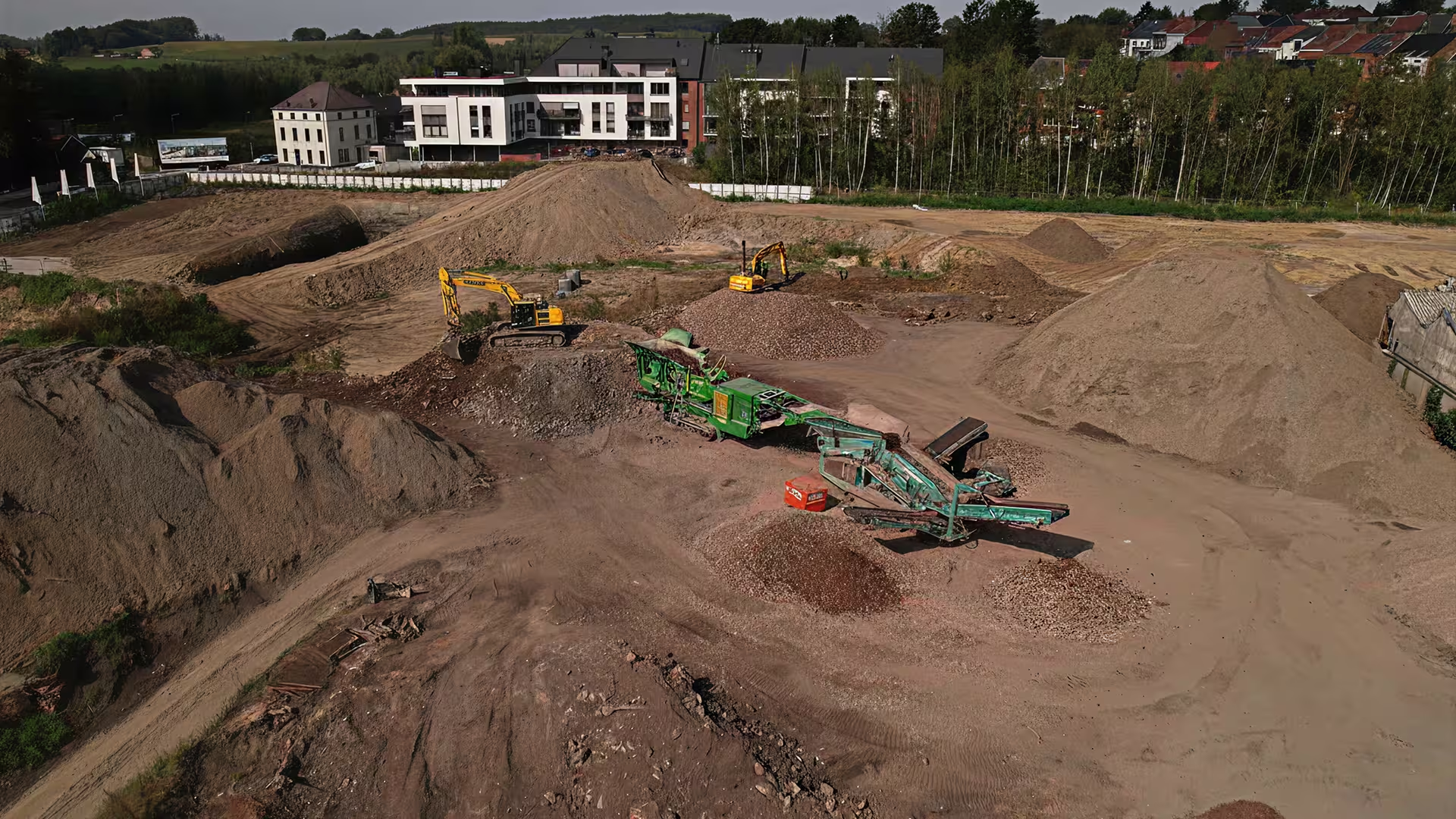
As part of the Îlot Saint-Roch project, which aims to transform an abandoned industrial site into a sustainable mixed district, ABV Development supported Immobel in order to allow the on-site recycling of aggregates from sanitation and earthworks operations in order to reuse them directly as part of the new development.
Real estate, like other business areas, is called upon to incorporate the principles of the circular economy. This can be translated in a variety of ways. Recently, ABV Development supported Immobel, a real estate development company, in a project to revalorize a former industrial site in an eco-responsible mixed neighborhood.
Recovering old building materials into recycled aggregates
This development located in the heart of Nivelles, known as Îlot Saint-Roch, provided for a sanitation project of a disused site and a major earthworks project to give the place new functions.
“As part of the earthworks, we were able to find debris and old masonry masses, as well as numerous concrete elements, stones that were already present in the ground,” explains Jean-Marc Lambert, partner at the ABV Development office. We then asked ourselves how to avoid having to remove these elements by reusing them as part of the new project, by recycling the aggregates on site. We then accompanied Immobel for consider such a circular economy approach.”
By considering sanitation requirements very early in the design and planning phases of the project, the partners were able to assess the various supply sources available to produce recycled aggregates on site.
Also read - The importance of doing a soil study before building a building
The various sources of recycled aggregates
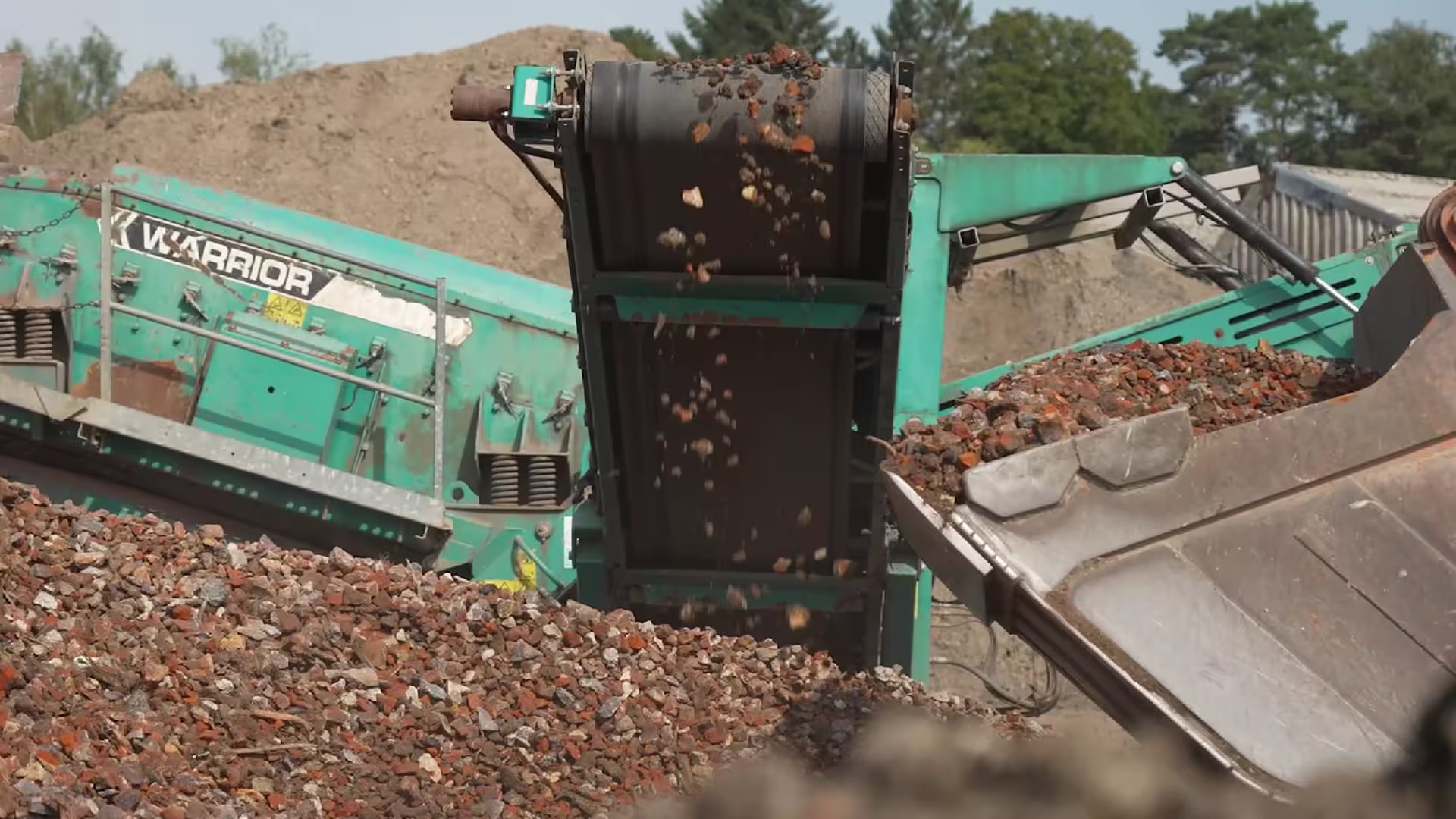
“We identified three, explains Gaetan De Bloudts, Technical Director at Immobel. On the one hand, there were residues of demolition products from existing hangars, with concrete and masonry elements. Then, there were buried masses, in this case the old foundations of the industrial site. Finally, through soil screening operations, we were also able to recover the stones present on the site. These elements have been transformed, through screening and crushing operations, into quality recycled aggregates, without wood, plaster or plastic residues.”
Also read - Exiting the waste status (SSD) of recycled aggregates in the Walloon Region
Adapt the specifications to incorporate the principles of the circular economy
With this in mind, Immobel was accompanied by ABV Development, which was able to adapt the project specifications to include recycling operations.
” For each location where earthworks were planned, the operations to be carried out were specified in order to allow and optimize the reuse of materials present on site through the new project., comments Jean-Marc Lambert. The approach, if we consider the principles of the circular economy, is very interesting. It has made it possible to recover a considerable volume of stone present on the site and, at the same time, to reduce the number of trucks required forExcavation of land and their evacuation as well as those needed to import new materials on site. ”
This on-site recycling makes it possible to limit the use of raw materials from elsewhere, which often represents a considerable environmental cost.
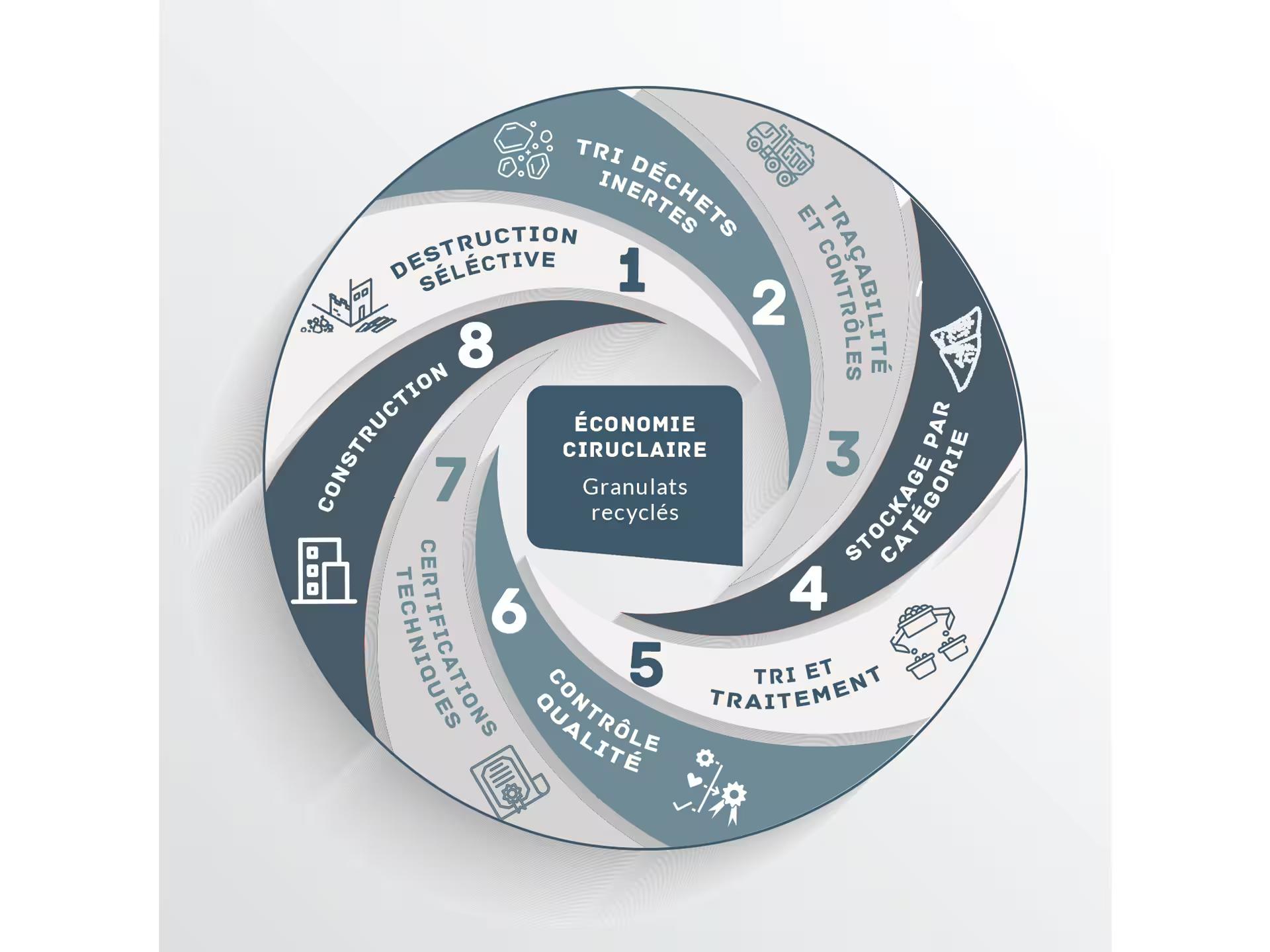
Principles of the circular economy in real estate and carbon footprint reduction
” For each of our projects, we conduct a study using a recognized method to assess the environmental impact of each of the products used in development, including their CO footprint.2, comment Gaetan De Bloudts. The use of aggregates recycled on site makes it possible to considerably minimize the environmental impact of our projects. ”
Immobel, beyond this recycling approach, is also committed to the circular economy through the implementation of an urban mining program.
” This makes it possible to list all the materials, products and construction elements used in buildings and likely to be used, continues the technical director. This data is shared at the level of a sectoral platform, with the aim of minimizing the extraction of raw materials necessary for construction in the future through the reuse of existing materials. ”
Also read - Businesses: measuring, reducing, offsetting CO2 emissions
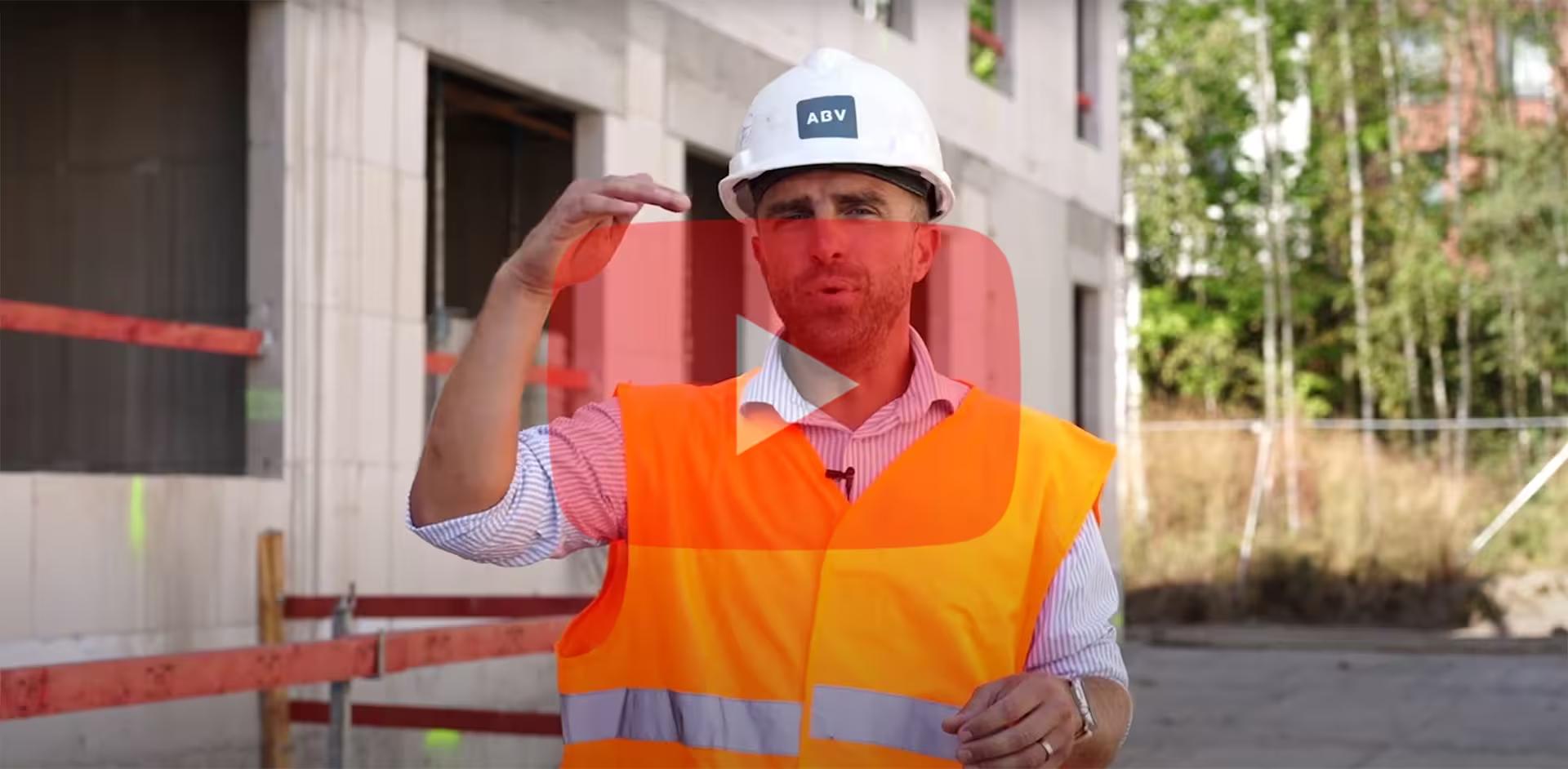
Discover how ABV Development supported Immobel on this project to reuse recycled aggregates in images: https://youtu.be/YTl0EM_aOIo